Tuesday, August 27, 2013

Whale Page # 2 from the San Juan Journal


Every August we do a special informational page in the local paper,
the San Juan Journal, all about the endangered Southern Resident Killer Whales. This year, Director Ken Baclomb is the author. We thought we would share them with all of you who don't have access to the San Juan Journal!
This is the second installment:

What do Orca Whales Like to Eat?


In the previous article in the Whale Pages, we presented the fact that the whales we call Killer or Orca represent a complex of many distinct populations that may prove to qualify as species; and, here we present the fact that these distinct populations specialize or “like to eat” particular prey species. All of the populations of so-called Killer whales are predatory animals currently assigned to one species (Orcinus orca, Linnaeus, 1758), and they must eat to survive; but, the preferred prey species for each population varies according to what is locally abundant and available in the marine ecosystem within swimming range. The classic studies regarding what “Killer” whales like to eat came from examination of stomach contents of these whales that were stranded in various locations around the world, or taken by whalers. The food items were fish, squid, seals, porpoises, other whales, etc. that led to the early conclusion that Orcinus orca was euryphagous, that is they fed upon a wide variety of prey and could switch diet if a particular variety became scarce. More comprehensive recent studies, including those done by the Center for Whale Research, indicate that each branch of the Orca family tree tends to strongly lean toward a prey species that is locally available and sufficiently abundant year-round for a very long time (many whale lifetimes). This tendency is termed stenophagy – a narrow variety of prey species; and, over the evolutionary time scales available from thousands of whale lifetimes it has resulted in very distinct differences in the anatomy and morphology of the various whale populations.


Transient killer whale with a harbor seal in it's mouth-
Photo by Dave Ellifrit
            “Transient” Orcinus orca whales may indeed be properly called “killers” (at least by the seals, sea lions and porpoises they consume), and they have very robust jaw structure with relatively big teeth (the better to bite you with, my dear). Their lifestyle is rather nomadic, as they travel with the seasonal migrations and/or the seasonal birthing and weaning cycles of their prey species. These mammal predator whales typically venture into the waters around the San Juan Islands in autumn and winter months when harbor seals are weaned (and unsuspecting), and when sea lions overwinter in the Salish Sea. Typically the “transients” travel in relatively small groups of 3-15 relatives and associates, and they are usually stealthy (non-vocal, so the prey species cannot hear them). This year (2013) we have witnessed an unprecedented influx of “transients” around the San Juan Islands, some coming from as far as California and Alaska. There are about 250 “transient” killer whales in the Center for Whale Research catalogue for this area.

Southern Resident, L84, with a salmon in his mouth-
Photo by Dave Ellifrit
           Orcinus orca whales may be properly called “Orca”, a term that is more fitting with the image of a peaceful non-stress-inducing population of mellow fish-eating predators with less robust jaw architecture and smaller teeth than “transient” killer whales. The “resident” lifestyle is adapted to the migrations and seasonal abundance of salmon in the eastern North Pacific Ocean. The salmon most available year-round within the “resident” swimming range are Chinook, or Kings, which happen to be the largest and most nutritious species of salmon in the world (formerly weighing up to 125 pounds each!). Chinook lifestyle, in turn, is predatory upon smaller fishes that are in greatest abundance on the continental shelf of the Pacific Ocean near the edge of upwelling currents. Chinook salmon have been taken in Human fisheries by the millions each year for the past century, and most wild populations of these fish are now “Endangered” with many already extinct. The “resident” Orca whales typically venture into the waters around the San Juan Islands in pod and multi-pod associations (Superpods) from May to September when the mature Chinook salmon are bound primarily for the Fraser River for spawning, though a few migrate to other river systems in the Salish Sea. Thus, we have an Endangered whale species obligate feeding upon an Endangered salmon species – a revolting development unforeseen by dam builders, habitat usurpers, and fishermen. As of 2013, there are currently 82 southern “resident” Orca whales in this population, down from nearly 100 twenty years ago, and down from more than 200 that we have catalogued. We have demonstrated that the “resident” Orca survival is significantly linked to Chinook abundance, and the government managers on both sides of the US/Canada border should take more notice of this inconvenient truth before it is too late. This year (2013) during the summer when whale-watching is historically best, we have witnessed an unprecedented absence of “residents” around the San Juan Islands, and a continuing downtrend in their population number concurrent with a near collapse of Fraser River Chinook.


Ken Balcomb

Director
Center for Whale Research

Monday, August 19, 2013

Whale Pages from the San Juan Journal


Every August we do a special informational page in the local paper, the San Juan Journal, all about the endangered Southern Resident Killer Whales.  This year, Director Ken Baclomb is the author. We thought we would share them with all of you who don't have access to the San Juan Journal!

Keeping an eye on local Orca whales 

            Whales of any species can be individually recognized by their natural shapes and color patterns using a technique called “photo-identification” that was pioneered in the 1960’s and 70’s by biologists at San Juan Island’s Center for Whale Research. The local “killer whales”, now affectionately known as Orca, are among the most distinctively appearing whales in the world, and many individuals can be easily recognized by naturalists and admirers of wildlife. To assist with this recognition, a photo-identification catalogue of every individual orca whale common to the Pacific Northwest has been maintained by biologists at the Center since 1976, and it is updated every year.
Above, L54 and her three offspring are shown as a family tree. 
The matriarch, L54, is at the top, with her descendants below, eldest to 
youngest from left to right. L117, who’s sex is unknown, is the youngest of 
L54’s calves, born in 2010. New born calves often have a grey and mottled 
looking saddle patch. Because calves stay close to their mothers for the first 
year or so of their life, they are often identified by their association with
their mother rather than their saddle patch. To identify older individual whales, 
look closely at the details of the saddle patch of each animal in the subgroup. 
Every orca whale has a distinct and unique saddle patch, 
much like a human fingerprint,  unlike any other whale in the world.


As a result of this cataloguing some very remarkable facts have been uncovered about the local Orca whales and about their species worldwide. For example, their natural lifespan is long (comparable to human lifespan to eighty or more years) and they travel in family groups (known as “pods”) swimming 75 miles per day on average. Three of these family groups, designated J,K, and L pods, are frequently seen travelling back and forth around the San Juan Islands from May to October; and, they have been termed “resident”. Other family groups and individuals are typically less frequently seen around the San Juan Islands; and, they have been termed “transient”. From long-term observation and genetic studies it has been learned that the “residents” and “transients” do not mix and interbreed – they are very, very distant relatives, somewhat analogous to Humans and Neanterthals but both living at the same time, and in the same general area.
            In fact, when we extend these individual and genetic studies we find that there are probably ten or more distantly related large branches of the Orca family tree worldwide that do not naturally mix or interbreed, and they have been on this planet much longer than we Humans have. Scientists are just now trying to determine whether this arrangement constitutes a complex of many species, and why. Nonetheless, we have a very precious “resident” population here in the San Juans, and they have been recently affirmed as Endangered under the US Endangered Species Act and Canada’s Species at Risk Act.
            The questions are out there, from deep pondering about the roles that species play in the web of life on Earth, to what time will the whales be seen at Lime Kiln whale-watch park. We do not yet have all of the answers, but if we keep our eye on the welfare of our precious local Orca whales we may just have a chance to find out how “our” world works, and maybe we will be smart enough to keep it working.
Eyepatches are important too!
Orca eyepatches are also an important marking
used for identification. Eyepatches, the white
patch above the eye, are unique to individuals just like
saddle patches. Sometimes we can’t get a good look at
the saddle patch, say when a whale spyhops, but we
can use the eyepatch instead to identify the individual.
This eyepatch photo is of the newest calf in L pod L119.

            In future editions of these Whale Pages, we will provide additional information about our famous Orca whales.

Ken Balcomb
Director
Center for Whale Research


Don't forget!  Membership Helps!  
To become a member of the Center for Whale Research and learn more about our local killer whale populations go to our website: www.whaleresearch.com

Wednesday, September 19, 2012

New Paper out in Science

Dr. Emma Foster has provided a brief summery of her paper that recently came out in Science:
"Adaptive Prolonged Postreproductive Life Span in Killer Whales"


1.      The key finding: We have discovered that female killer whales have the longest menopause of any non-human species so they can care for their adult sons. Our research shows that, for a male over 30, the death of his mother means an almost 14-fold-increase in the likelihood of his death within the following year.

2.      The relevance/link to humans: Biologically-speaking, the menopause is a bizarre concept! Very few species have a prolonged period of their lifespan when they no longer reproduce. Like humans, female killer whales buck this trend and stop reproducing in their 30s-40s, but can survive into their 90s. The benefit of a menopause to both human and killer whale mothers is in spreading their genes. The different ways this has evolved reflects the different structure of human and killer whale societies. While it is believed that the menopause evolved in humans partly to allow women to focus on providing support for their grandchildren, our research shows that female killer whales act as lifelong carers for their own offspring, particularly their adult sons.

3.      Why this is important: The menopause remains one of nature’s great mysteries. This research, which involved studying 36 years-worth of data, is the first ever study of its kind and is an exciting breakthrough in our understanding of the evolution of the menopause.

J49 is a boy!

September 17, 2012

Bart Rulon of Island Adventures, sent us these photos yesterday of J49  rolling over reveling his sex as a boy!
J49 in the youngest member of J pod, first seen on August 6th.  Both him and mom, J37 appear to be healthy and doing well!

Tuesday, August 7, 2012

New calf in J pod: J49!

August 6: 
New Calf in J pod- 
J37 has her first calf!

Following a nearly two week hiatus in sightings, J pod returned today with what is now a typical “spread out” pattern all along the west side of San Juan Island, heading north. A lone female whale “Spyhopped” in front of CWR at 11:35 am; and, she was subsequently identified as J37 from photographs of her at 11:44am about ¼ mile offshore when she still appeared to be alone (no obvious calf present).  We headed out in “Shachi” to update our photo-identification of young whales, and next observed J37 at 2:35pm in Haro Strait off Spieden Channel (48 39’ 42.7”, 123 13’ 50.6”) with a very new born calf!  The calf’s dorsal fin was flopped over to the left and there were very visible creases in the blubber of its side due to fetal folding.  The head and neck region was lumpy looking, like that of a very newborn human baby, and the calf surfaced with exaggerated head lunges, indicating it had healthy energy and was breathing properly - no maternal lifting required.  We followed J37 and her calf at a distance until 3:52pm when they were in Boundary Pass north of Stuart Island; and, all of this time she was not accompanied by any other whales.  At that time, part of J pod was ahead of the pair by approximately 2 miles and the other part of J pod was off Lime Kiln Park, having split off from the leaders and gone back south along San Juan Island. By the time the new mother and her calf were nearing Blunden Island, British Columbia, they reportedly joined in the rather loose northern formation of J pod whales still heading northeasterly toward Georgia Strait, and it was reported that the other whales were “supporting” the calf on their backs. Perhaps this support behavior was some kind of greeting ritual for the new baby addition to the population. On previous occasions, we have seen very new calves being supported by and pushed around by other whales in the community, perhaps in some sort of “new whale baby” welcoming and bonding ritual. The immediate family of the new calf – mum, grandma, aunt and uncle – reportedly broke off from the other whales before entering Georgia Strait and heading toward Sucia Island, Rosario Strait by nightfall.

A bit of History about the mum: The first catalogue quality photograph we have of J37 as a baby was in August 2001, at which time she appeared to be five or six months old.  Then, the first photograph we have of J37 with a baby was today, August 6, 2012, so we can assume that the new mother is 11 ½  years old - the youngest confirmed mother that we are aware of in the Southern Resident Community.  With a gestation of approximately 17 months she must have been impregnated during or around January 2011 when she was about 10 years old!  We had four encounters with J pod in January 2011 and all were with both J and K pods combined and L87. Hence, the father must have been among them at that time. Maybe this is why L87 is hanging around J pod so much!

A little bit about the family: The grandmother of the new calf, J14, is thirty eight years old and is the very productive mother of three living offspring and three that have not made it to the present time. Her first calf, J23 born in 1987, was a male that survived for four years. Her second calf, J30 born in 1995, was a male that survived until December 2011, but went curiously missing all of this year and is presumed dead. J37 is J14’s third calf born in 2001, and J40 (a female) is her fourth calf born in 2004. J14 had a neonate calf (J43) that was seen on one day, 24 November 2007, but it did not survive. Most recently, in March 2009, J14 had another calf, J45 a male, that survives to the present.  The new calf of J37 will be designated J49, and it is born into a very productive matriline so we are hoping it fares well. With this birth, the Southern Resident Killer Whale Population (SRKW in government jargon) now numbers 86, though that number could change at any time with births and deaths.

Please be respectful of the new baby and its family and keep more than a two hundred yard distance away when viewing from a maneuverable vessel. The professional whale watching operators will no doubt be extra cautious on the whales’ behalf.

For the media- here is a link to a few full sized photographs of the calf and mom.  These photos are for media publications only, not for personal use. Please credit the Center for Whale Research: J49

Tuesday, July 10, 2012

Superpod II


Killer Whales in the Wild Versus in Captivity - 

Meet the experts and participate in the discussion.


Saturday July 21st, 2012
Friday Harbor, Wa
For the second time in just over one year a diverse collection of killer whale (orca) experts & former trainers will congregate and share information regarding orca populations, including wild and captive animals.  Superpod (SP) events are held during July in conjunction with the Southern Resident orcas which are swimming around San Juan Island chasing Chinook salmon. The combination of J, K, and L pods together is called a "superpod."
Superpod II is a face-to-face gathering of 3-4 dozen experts/enthusiasts in an all day event that will include presentations, movies, a book signing by author David Kirby of the soon to be released "Death at SeaWorld", and a benefit showing of the documentary film "The Whale".
These free public events will be held on Saturday, July 21st 2012 at Friday Harbor House in Friday Harbor on San Juan Island, Wa.  Drinks will be available for purchase. Some events have a separate sign-up (please see below).
Among the scientists who will be in attendance are Ken Balcomb, director of the Center for Whale Research, Dr Ingrid Visser, lead scientist and founder of the Orca Research Trust, in New Zealand, andDr. Naomi Rose, senior scientist for Human Society International (HSI). Naomi oversees HSI campaigns to protect wild and captive marine mammals and is a member of the International Whaling Commission’s Scientific Committee. Dr. Rose is also the lead protagonist in David Kirby's much anticipated scientific thriller called Death at SeaWorld.
Tentative schedule for public events Saturday, July 21st:
10:00 a.m. Attorney Steve Wise speak about the Nonhuman Rights Project. The "NHRP" is devoted to gaining rights for animals who have no voice.
"The Nonhuman Rights Project argues that some nonhuman animals should have the capacity to possess common law rights. What is the common law and why do we take that approach as opposed to using federal laws, which only provide for minimal protection of certain animals? ".
Noon to 2:30 p.m.  Brown bag lunch and films, presented by Cara Sands of Friends of the Dolphins. Two films are scheduled which show the capture process of wild dolphins and whales, and which explore the consequences of captivity; "The Cove" and "A Fall From Freedom".
3 p.m.  Young activist Ella Van Cleave, who recently gave a presentation at the esteemed "Ted Talks," will speak on the powerful youth movement.
3:30 p.m. Legal counsol to PETA, Jeff Kerr, will speak on recent legal challenges.
*****
5:00 p.m.  Book signing of "Death at SeaWorld" by author David Kirby, plus panel discussion with Humane Society International marine mammal expert Dr. Naomi Rose and 3 former SeaWorld orca trainers; Carol Ray, Jeffrey Ventre & Samantha Berg. (Please sign up for this event here).
We hope to have at least one live "call in" Twitter event during David Kirby's book signing. Our understanding is that two documentary film crews will be on island capturing parts of Superpod II. So look for at least one film in 2013...
*****
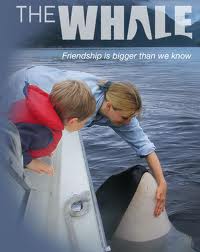
7:30 p.m. A benefit showing of "The Whale" for the Center for Whale Research.  Filmmakers Suzanne Chisholm and Michael Parfit will present their heartwarming film, and signed posters will be available for purchase.  All donations and proceeds from sales at the film showing go exclusively to support the Center for Whale Research in their continued efforts to save the endangered population of Southern Resident orcas.  (Please sign up for this event here).
The Whale, a family film about a friendly whale

Benefit Event for the Center for Whale Research

Candace Calloway Whiting